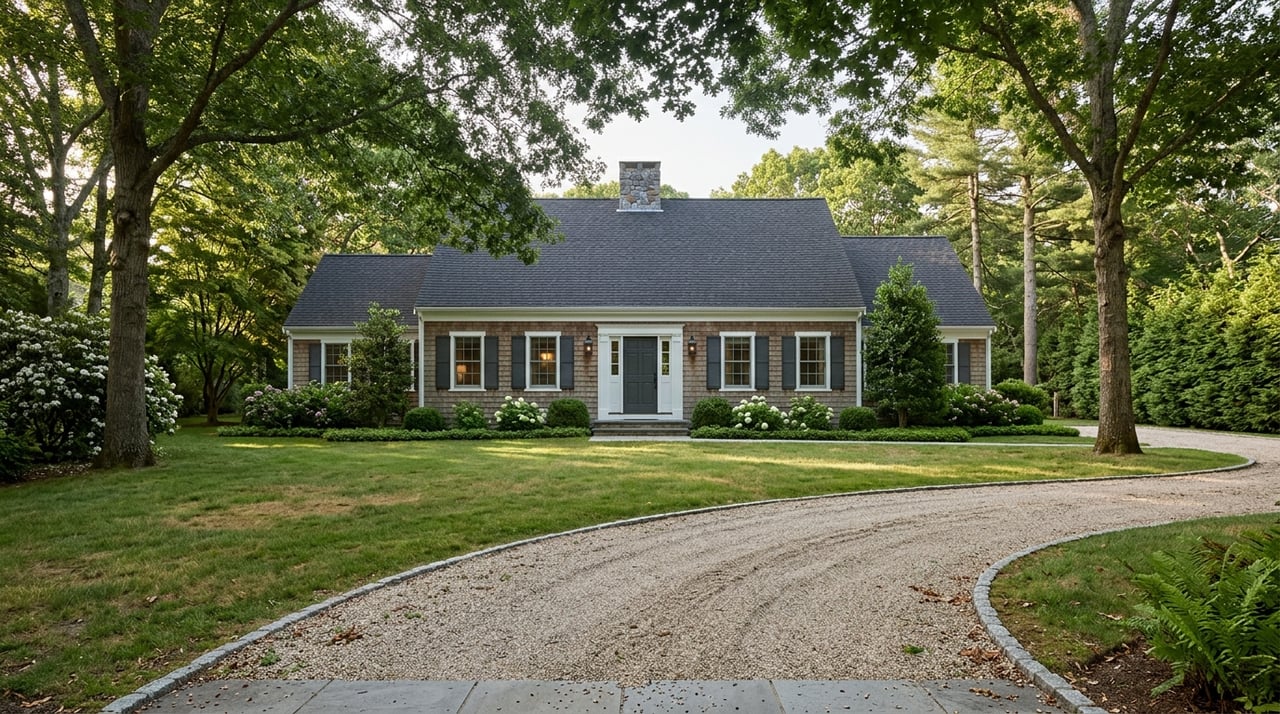
Looking for more space, more privacy, and a quieter day-to-day rhythm? Two-acre living in Weston, CT, can offer exactly that, but it also comes with a different set of expectations than you might find in denser Fairfield County towns. If you are considering a move to Weston, it helps to understand not just the appeal, but the practical realities of owning a larger property here. Let’s dive in.
What two-acre living means in Weston
Weston is a small, mostly residential town in southwestern Connecticut, about 45 miles from New York City. The town describes itself as a community with two-acre zoning, minimal commercial development, and a small town center, and the population is estimated at 10,490 in 2024, according to Weston’s town overview and U.S. Census QuickFacts.
On the ground, Weston’s Two Acre Residential and Farming District generally allows one single-family home per lot with a minimum lot size of two acres. The zoning also includes minimum frontage, setback, coverage, and height rules, including a 15% maximum building coverage limit and a 35-foot height limit, based on the town’s zoning regulations.
That matters because two acres does not automatically mean every part of the property is equally usable. The lot’s shape, frontage, setbacks, and environmental constraints all affect how much space you can actually build on or change over time.
Why Weston feels different
Weston’s large-lot pattern is not accidental. The town’s 2020 planning document explains that Weston is primarily an exurban residential community, that nearly the entire town is zoned for single-family residential and farming uses, and that 98.5% of housing units are single-family homes, with some smaller-lot homes in older areas that predate zoning. You can review that in the town’s Plan of Conservation and Development.
The same document also notes that there is little additional room for growth because much of the potential build-out has already been protected as open space. For you as a buyer, that is important context. Weston’s low-density character is not just a current look and feel. It is deeply tied to the town’s long-term land-use pattern.
There is a limited Village District intended to expand commercial development and housing choices, but it is a narrow exception compared with the rest of town, according to the zoning regulations.
What daily life feels like on a larger lot
The biggest lifestyle shift is often privacy and separation. Between the zoning standards and Weston’s own description of a rural but sophisticated environment with minimal commercial development and no heavily trafficked commercial roads, homes generally have more buffer from one another and a more country-residential feel, according to the town overview.
That extra space can be a major draw if you want room to spread out, entertain outdoors, garden, or simply enjoy a quieter setting. At the same time, larger lots usually require more hands-on care than homes on smaller parcels.
You should expect more lawn, more trees, more driveway surface, and more seasonal upkeep. Weston Public Works maintains roads, roadsides, and storm and sanitary sewers, and town crews plow, sand, and salt town roads during storms. But if a property is on a private road, the town’s emergency management guidance notes that residents should arrange their own clearing if downed trees or debris block access.
Expect more self-reliance
In a lower-density town like Weston, some daily systems are simply more owner-driven than they are in a compact suburb. Weston’s permit guide repeatedly references wells and septic systems, and the town is also seeking a manager for two town-maintained drinking-water systems, which suggests buyers should confirm each property’s water and wastewater setup early in the process. You can see that in the residential permit guide and the town’s water system RFP.
This is one of the most important parts of due diligence. If you are comparing Weston with a more fully service-connected town, you will want clear answers about whether the home uses a well, septic, or another arrangement, and whether any planned improvements could trigger additional approvals.
Preparedness is part of the lifestyle too. Weston’s emergency management page recommends keeping at least 72 hours of water supplies on hand during outages, which reflects the more self-sufficient rhythm that often comes with larger-lot living.
Home projects can involve more review
If you are dreaming about adding a pool, expanding the house, reworking a driveway, or building another outdoor feature, expect a more layered review process than you might in a denser community. Weston’s permit guide says most residential applications need Aspetuck Health District approval first and asks for site plans showing existing structures, wells, septic systems, and proposed improvements.
That does not mean projects are off the table. It does mean that the lot’s physical constraints and the town’s review steps can shape what is realistic, how long approvals may take, and what supporting documentation you may need.
For buyers, this is why “two acres” should always be followed by a second question: How much of that land is truly usable for my goals?
Errands are simpler, but fewer
Weston does have a town center, and it plays an important role in daily life. According to the town’s website, residents can find a local food market, bank, dry cleaner, real estate office, post office, spirits shop, restaurant, and gas and service station there, along with Town Hall, the library, and the school campus nearby.
Still, Weston is not designed around a broad retail grid or heavy commercial activity. The town also notes that it lacks heavily trafficked commercial roads, and its planning document says Weston has only 6.6 acres zoned commercial plus 7.9 additional acres used commercially, based on the Plan of Conservation and Development.
In practice, that means many errands will likely involve getting in the car. For some buyers, that tradeoff feels well worth it for the privacy and space. For others, especially if you are coming from a more walkable town, it is important to go in with realistic expectations.
How Weston compares with nearby towns
If you are deciding between Weston and nearby coastal towns, the contrast is helpful. Census data shows Weston at 10,490 residents, compared with 27,996 in Westport and 65,300 in Fairfield, according to U.S. Census QuickFacts.
The commercial difference is even more noticeable. Census QuickFacts shows Weston at $1,700 in retail sales per capita, compared with $35,749 in Westport and $26,351 in Fairfield. Mean commute time is also longer in Weston at 46.6 minutes, versus 40.9 minutes in Westport and 32.9 minutes in Fairfield, based on the same Census source.
The clearest takeaway is that Weston generally feels quieter, more private, and more car-dependent than denser nearby towns. You still have local services and a defined center, but not the same concentration of retail, dining, or everyday walkability.
Costs and routine ownership details
When you are budgeting for two-acre living, look beyond the purchase price. Ongoing ownership may include more landscaping, tree work, driveway maintenance, and storm cleanup than you would expect on a smaller property.
You should also factor in property taxes. Weston’s Assessor page lists a current mill rate of 23.90 for real estate and personal property.
Trash and recycling work differently than in some neighboring towns too. Weston’s transfer station is open Tuesday through Saturday from 8:00 a.m. to 2:30 p.m., recyclables are free except tires, and solid waste costs $4 per sticker or bag. It is another small example of how the town’s lower-density setup often comes with a more hands-on ownership routine.
Questions to ask before you buy
If you are considering a home in Weston, these are some of the smartest questions to ask early:
- How much of the two acres is usable based on setbacks, frontage, coverage limits, and site conditions?
- Does the property use a well, septic system, or another setup?
- What approvals would be needed for future additions or outdoor projects?
- Is the home on a town road or a private road?
- What level of maintenance should you expect for lawns, trees, drainage, and driveway access?
- How often will you need to drive outside town for errands or services?
The right answers depend on your priorities. If you value privacy, space, and a quieter pace, Weston can be a strong fit. If you want a denser retail environment and more everyday convenience close at hand, it may feel like more of a lifestyle adjustment.
Two-acre living in Weston is ultimately about tradeoffs that many buyers gladly make: more land, more separation, and a more country-residential setting in exchange for more upkeep, more driving, and a bit more self-reliance. If you want help evaluating whether Weston fits your goals, Gina Hackett can help you compare options across Fairfield County and navigate the details with clarity.
FAQs
What does two-acre zoning mean for homes in Weston, CT?
- In Weston’s Two Acre Residential and Farming District, lots generally require at least two acres and are subject to frontage, setback, coverage, and height rules that shape what can be built or expanded.
What should buyers know about utilities in Weston, CT?
- Buyers should verify whether a home relies on a well, septic system, or another arrangement, since Weston’s permit materials frequently reference these systems and they can affect future plans.
What is daily life like on a two-acre property in Weston, CT?
- Daily life often includes more privacy and outdoor space, but also more maintenance, storm cleanup, driveway care, and personal responsibility than in a denser suburb.
How convenient are errands in Weston, CT?
- Weston has a small town center with a few core services, but its limited commercial footprint means many errands are likely to require driving.
How does Weston, CT compare with Westport or Fairfield?
- Weston is smaller, quieter, and generally more car-dependent, with far less retail activity and longer average commute times than Westport or Fairfield.
What costs should buyers expect with two-acre living in Weston, CT?
- In addition to taxes, buyers should budget for landscaping, tree care, driveway upkeep, storm-related maintenance, and transfer station trash disposal costs.