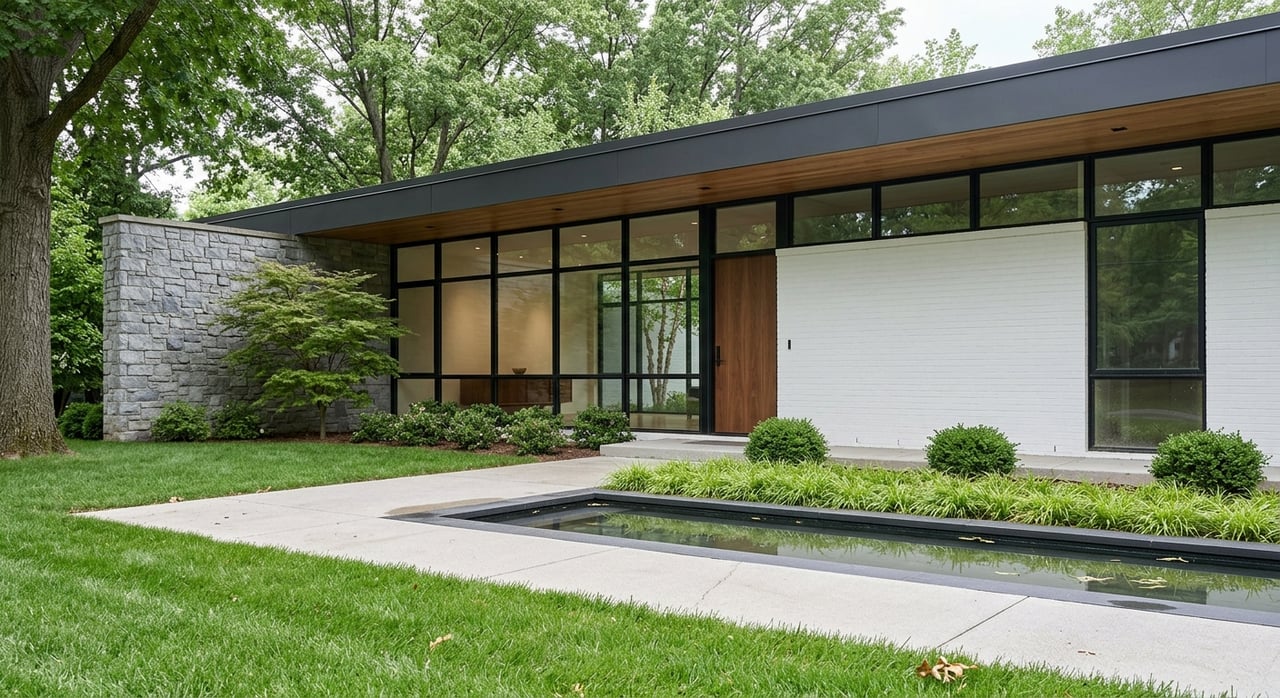
Are you the kind of buyer who notices rooflines, glass walls, and how a home sits on the land before anything else? If so, New Canaan holds a rare place in Connecticut real estate. Its modernist homes are not just striking to look at, they are part of a deep architectural story that still shapes how buyers search, evaluate, and compete for distinctive properties today. Let’s dive in.
Why New Canaan matters in modernist design
New Canaan did not become a modernist destination by accident. After World War II, five influential architects known as the Harvard Five settled in or around town: Marcel Breuer, Landis Gores, John Johansen, Eliot Noyes, and Philip Johnson.
They used New Canaan as a testing ground for new residential ideas. According to local preservation and museum sources, the town offered former farmland, proximity to New York City, and enough space to experiment with homes that connected more directly to the landscape.
Philip Johnson’s Glass House, completed in 1949, helped bring national attention to New Canaan. It also helped spark local interest in modern house tours and reinforced the town’s place in postwar architectural history.
The total number of modern houses varies by survey, but the broader point is consistent. Town and preservation records describe New Canaan as having an unusually dense collection of modernist homes for a small suburban community, with more than 80 built in the mid-century period and roughly 90 still standing by later counts.
What defines a New Canaan modernist home
In New Canaan, modernist homes often share a clear design language. You will frequently see low-slung forms, open layouts, extensive glass, minimal ornament, and careful placement on the site.
The Glass House is the best-known local example of that philosophy. It is designed as a glass pavilion with steel columns, a flat roof, and an open interior, all oriented to frame the surrounding landscape rather than shut it out.
That same idea appears in other notable homes across town, even when the shapes differ. Some feature dramatic roof forms, some use lattice screens or glass roof elements, and others create a strong indoor-outdoor relationship through floor-to-ceiling windows and open main living areas.
For architecture lovers, that is the appeal. These homes are often less about ornament and more about proportion, light, views, and the experience of moving through space.
Why buyers are drawn to these homes
For many buyers, a New Canaan modernist home offers something hard to replicate in newer construction. You are not just buying square footage. You are buying authorship, design intent, and a home with a recognizable point of view.
That can be especially compelling in a market where many properties feel interchangeable. A well-preserved or thoughtfully updated modernist house can stand out because it delivers a lifestyle centered on light, privacy, and a strong connection to the outdoors.
These homes also appeal to buyers relocating from design-focused urban markets. If you are coming from Manhattan or another city where architecture shapes daily life, New Canaan’s modernist inventory can offer a more land-rich setting without losing that design sensibility.
Original modernist or newer modern-style?
One of the first questions to ask is whether a house is a true postwar original or a later home inspired by modern design. In New Canaan, both exist.
Current public listings have included architect-attributed originals from the 1950s as well as newer contemporary estates built decades later. That means style alone is not enough to tell you what you are buying.
When you evaluate a property, verify three basics early:
- Build date
- Architect attribution
- Renovation history
Those details shape value, maintenance expectations, and the home’s place in New Canaan’s architectural story. They also help you separate a historically important residence from a newer home that simply borrows modernist cues.
Where modernist homes appear in New Canaan
Modernist homes in New Canaan are rarely a broad, uniform category of inventory. They tend to come to market as standout, architect-linked properties, often on larger lots and on roads associated with significant residential design.
Historic resource mapping identifies modern houses on streets including Oenoke Ridge, Lambert Road, Cross Ridge Road, Ponus Ridge Road, Frogtown Road, Logan Road, and Weed Street. Together with current listing patterns, this suggests buyers are more likely to encounter these homes in low-density residential settings than in the compact downtown core.
That setting is part of the appeal. Many of these homes were designed to work with topography, trees, and long views, so the lot and landscape are central to the experience.
What the current market tells you
Public listings show that New Canaan modernist homes often enter the market as rare, high-price opportunities. Recent examples have included homes offered around $2.75 million, $4.4 million, and nearly $5 million.
Listing language also gives you a sense of how these properties are positioned. Terms like mid-century modern, architectural masterpiece, and named houses tied to specific architects appear regularly, reinforcing that these homes are marketed as distinctive assets rather than standard inventory.
Not every opportunity appears in a typical for-sale format, either. Some notable homes may surface as rentals or private opportunities, which is important to know if you are searching for something highly specific.
The broader 06840 market has also been described as a seller’s market with low inventory and an average pending time of about 35 days. That does not prove how quickly modernist homes trade on their own, but it does underscore how difficult it can be to replace a truly special property once it appears.
Preservation matters more than many buyers expect
If you are considering a modernist home in New Canaan, preservation should be part of your research from day one. This town’s modern architecture has faced demolition pressure in the past, and local preservation efforts have played a major role in helping key homes survive.
Some houses have formal recognition, while others rely more on private stewardship. Protection is not automatic just because a home is old, architect-designed, or widely admired.
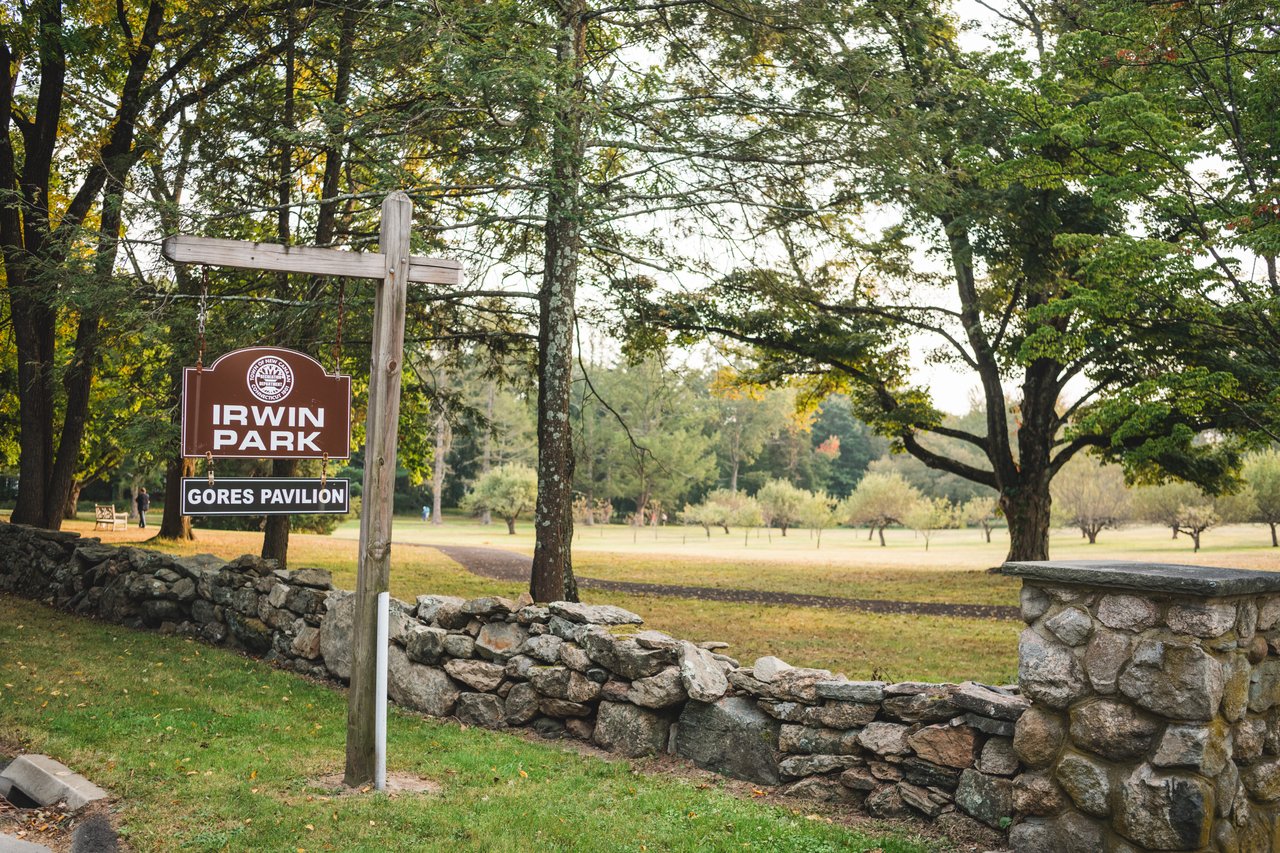
That is why it helps to understand the different layers of recognition. In New Canaan, the Glass House is one of only two National Historic Landmarks in town, and the Glass House, Gores Pavilion, and Hodgson House are among the modern properties listed on the National Register of Historic Places.
What local historic district rules can mean
A practical question for buyers is whether a property sits within New Canaan’s local historic district. If it does, exterior changes require a Certificate of Appropriateness.
The local commission reviews exterior architectural features. It does not review interiors, paint color, or softscape landscaping under the regulations cited in the research.
That distinction matters. The ownership experience can be very different depending on whether the home is locally designated, rather than simply historically interesting.
Smart questions to ask before you buy
A modernist home can be deeply rewarding to own, but it also deserves careful due diligence. Because these houses prioritize glass, openness, and site-specific design, your evaluation should go beyond finishes and staging.
Here are a few smart questions to bring into your search:
- Is the home an original postwar modernist house or a later contemporary interpretation?
- Is there documented architect attribution?
- What renovations have been completed, and how closely do they respect the original design?
- Is the property inside the local historic district?
- Are there known preservation protections or designations tied to the house?
- How does the house sit on the lot, and how much of the design experience depends on privacy and landscape?
These questions can help you focus on long-term fit, not just first impressions. They also help you compare one architecturally significant home to another with more confidence.
Why this niche needs local guidance
Buying a modernist home in New Canaan is usually not a plug-and-play process. Inventory is limited, pricing can reflect both design pedigree and rarity, and the details that matter most are often highly property-specific.
That is where local market knowledge becomes especially valuable. You want clear guidance on how a specific home fits within the broader Fairfield County market, how to interpret its renovation history and positioning, and how to move quickly when a compelling property comes up.
For buyers drawn to architecture, the goal is not just to find a modern house. It is to find the right one, at the right moment, with a full understanding of what makes it special.
If you are exploring architecturally significant homes in New Canaan or anywhere in Fairfield County, Gina Hackett offers direct, high-touch guidance grounded in local market knowledge and polished representation.
FAQs
What makes New Canaan important for modernist homes?
- New Canaan became a major center for postwar modern residential design because the Harvard Five architects lived and worked in or around town, creating an unusually dense collection of notable modern houses.
Are all modernist homes in New Canaan historic originals?
- No. New Canaan has both true postwar originals and newer homes built in a modern style, so you should verify build date, architect, and renovation history.
Are New Canaan modernist homes protected from demolition?
- No. Protection varies by designation and location, and not every modernist home has the same level of preservation oversight.
What happens if a New Canaan home is in the local historic district?
- Exterior changes require a Certificate of Appropriateness, and the review applies to exterior architectural features rather than interiors, paint color, or softscape landscaping.
Where are modernist homes usually found in New Canaan?
- Historic mapping and listing patterns point to roads such as Oenoke Ridge, Lambert Road, Cross Ridge Road, Ponus Ridge Road, Frogtown Road, Logan Road, and Weed Street rather than the downtown core.
Do modernist homes come up often on the New Canaan market?
- They tend to appear as rare, high-price, architect-attributed opportunities, and some may surface as rentals or private opportunities instead of standard public listings.