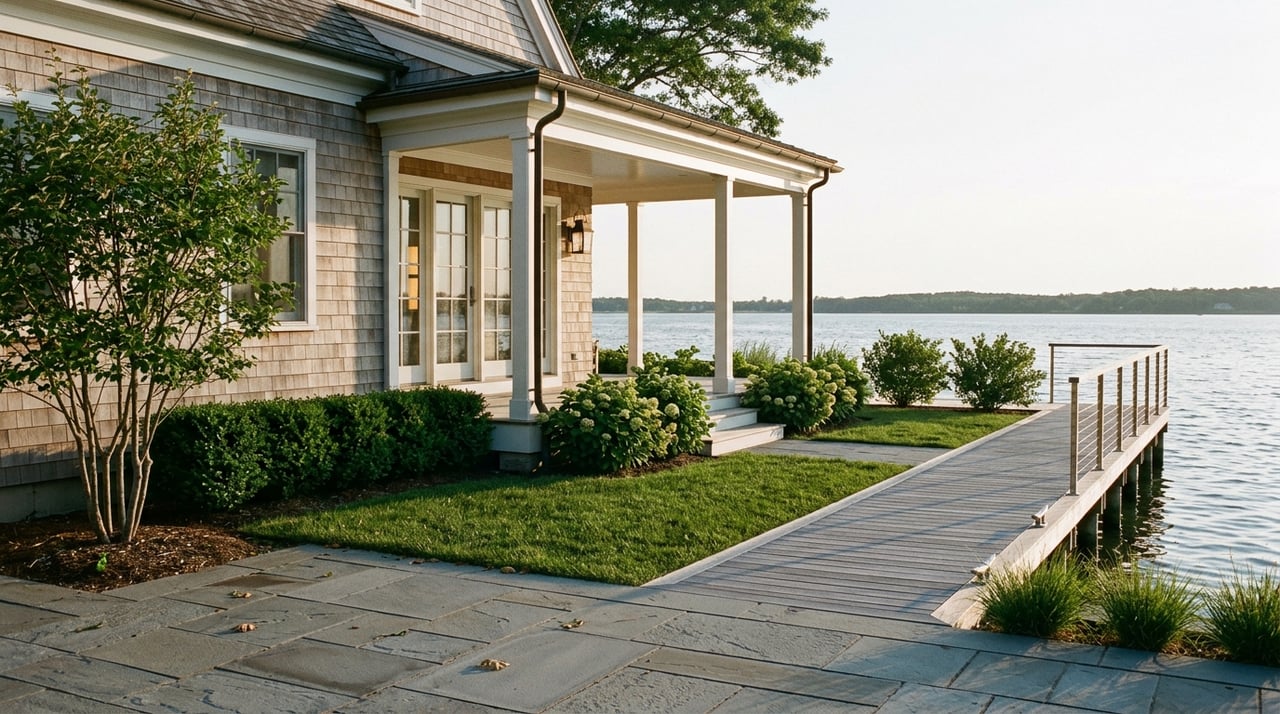
If you are thinking about buying near the water in Darien, you are not just choosing a home with a view. You are choosing between very different shoreline experiences, each with its own access, rules, costs, and long-term considerations. The good news is that with the right local guidance, you can understand what matters most before you make an offer. Let’s dive in.
What near the water means in Darien
In Darien, “near the water” can describe several distinct property types. You may be looking at a true Long Island Sound waterfront home, a property on a cove or harbor, a beach-adjacent home, or a home in a private-association setting with water access tied to neighborhood rules.
That distinction matters because Darien’s shoreline is shaped by multiple harbors and inlets, not one single waterfront strip. The town says it has five harbors and 16.5 miles of Long Island Sound coastline, and its official bond statement notes that waterfront properties remain among the highest-valued homes in town.
Darien’s harbor areas include Darien Harbor and Noroton Harbor, Noroton Bay, Ziegler’s Cove, Scott Cove, Tokeneke Beach Cove, Five Mile River, Fish Islands, and Holly Pond. Some of these settings offer direct exposure to the Sound, while others provide a more sheltered harbor or cove environment.
Darien waterfront micro-markets
True waterfront homes
A true waterfront property usually offers the strongest connection to the water. That may mean direct frontage, open views, and in some cases existing shoreline structures such as a dock, seawall, or bulkhead.
These homes often carry the highest values, but they also tend to come with the greatest complexity. Before buying, you will want to understand flood-zone status, coastal permitting history, and what repairs or improvements may require future approvals.
Cove and harbor properties
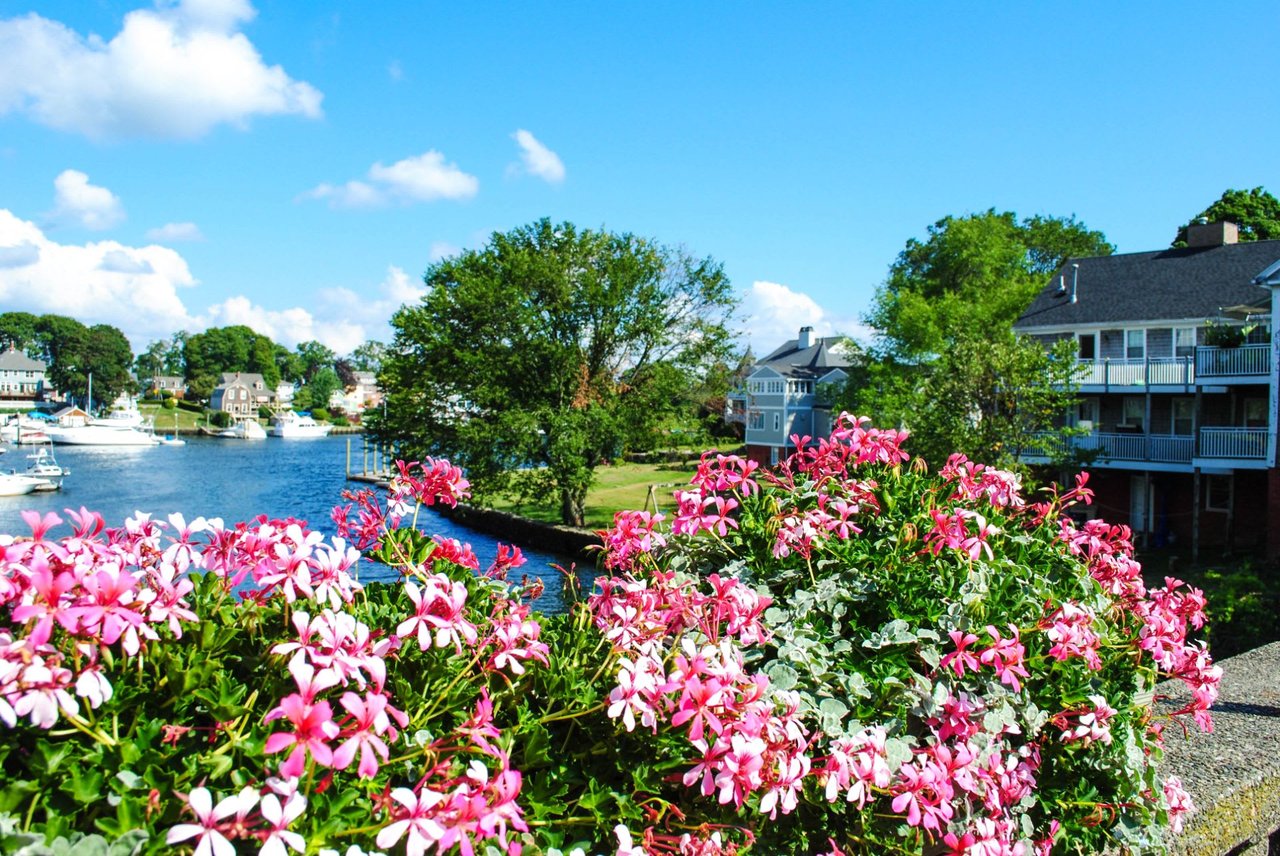
Cove and harbor homes can offer a different kind of appeal. You may get water views, calmer water conditions, and access that feels more tucked away than an exposed Sound-front location.
For many buyers, these homes strike a balance between lifestyle and practicality. Still, access is not always straightforward, so it is important to confirm whether the property includes a dock, mooring rights, or another form of water access.
Beach-adjacent homes
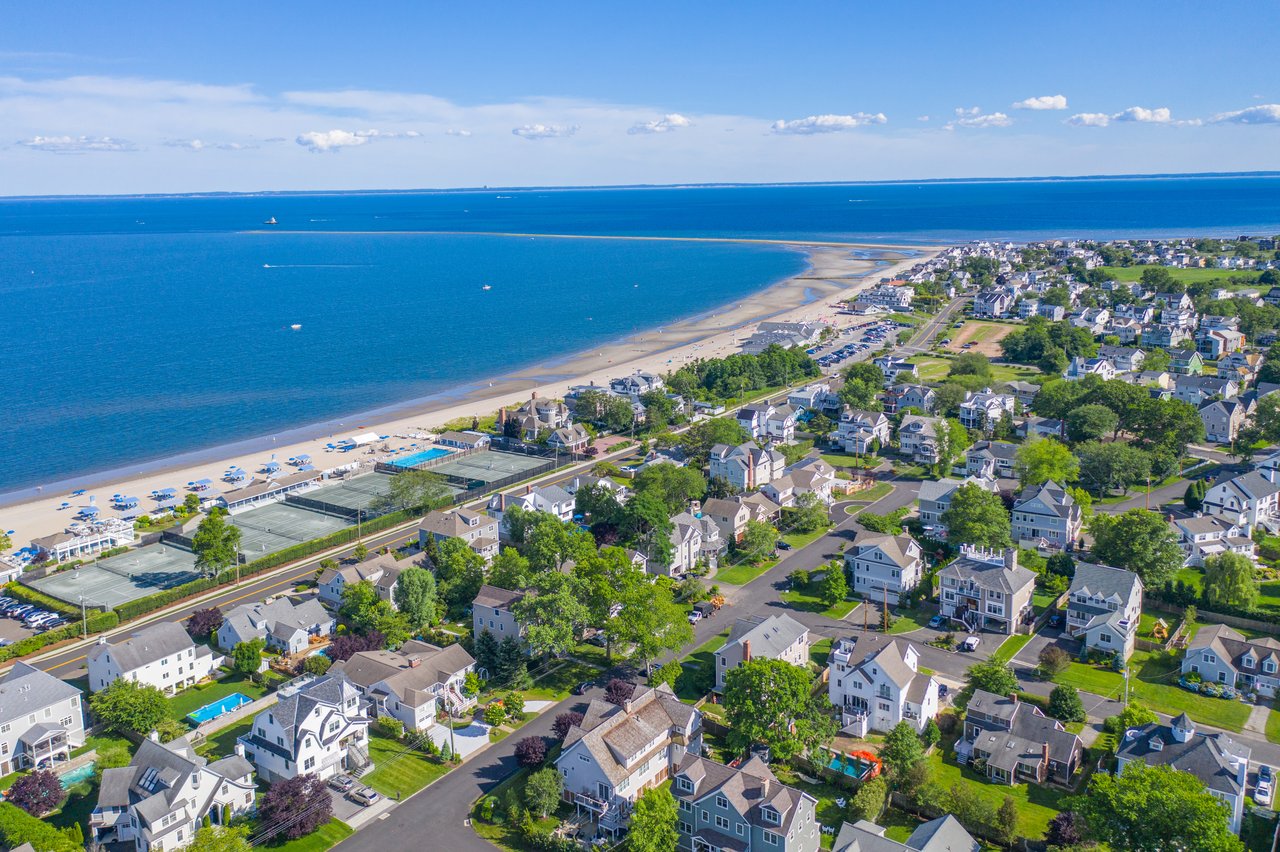
Some homes are desirable not because they sit directly on the water, but because they are close to Darien’s beach amenities. That can be a strong lifestyle advantage if you want easy access to swimming, picnicking, paddling, or simply spending time by the shore.
In these cases, the key question is often not “Can you see the water?” but “How do you use it?” Resident beach access in Darien is permit-based, so convenience depends on eligibility and town rules rather than distance alone.
Private-association neighborhoods
Darien also includes private-association shoreline areas. One example in the zoning text is the Noroton Bay District Residential Zone, a private-association neighborhood of about 77 lots where streets and storm drainage are privately owned and maintained.
That kind of ownership structure can shape your day-to-day experience and your costs. It can also affect what you are responsible for as an owner, so you will want to review association or district details early in the buying process.
Why water access matters as much as views
In Darien, a beautiful view does not always mean easy water access. That is one of the most important things buyers should understand before focusing too heavily on photos or listing language.
The Harbor Master says Darien has five harbors with mooring fields, but only Darien Harbor at Pear Tree Point Beach and Noroton Bay at Weed Beach are accessible by land. Other coves and beachfront areas are not land-accessible unless you are a waterfront property owner.
That means access can take several forms:
- Direct waterfront ownership
- Resident beach privileges
- A private pier or shoreline structure
- Club-based access
- A mooring assignment through the town
- Boat launch access
Each option creates a different lifestyle. If boating or paddling is part of your plan, you should verify the access method before you fall in love with the home itself.
Darien beach and harbor access basics
Darien’s main public waterfront amenities are Weed Beach and Pear Tree Point Beach. Weed Beach includes a sandy swimming beach, tennis and paddle courts, a clubhouse, a playground, picnic areas, and a seasonal concession stand.
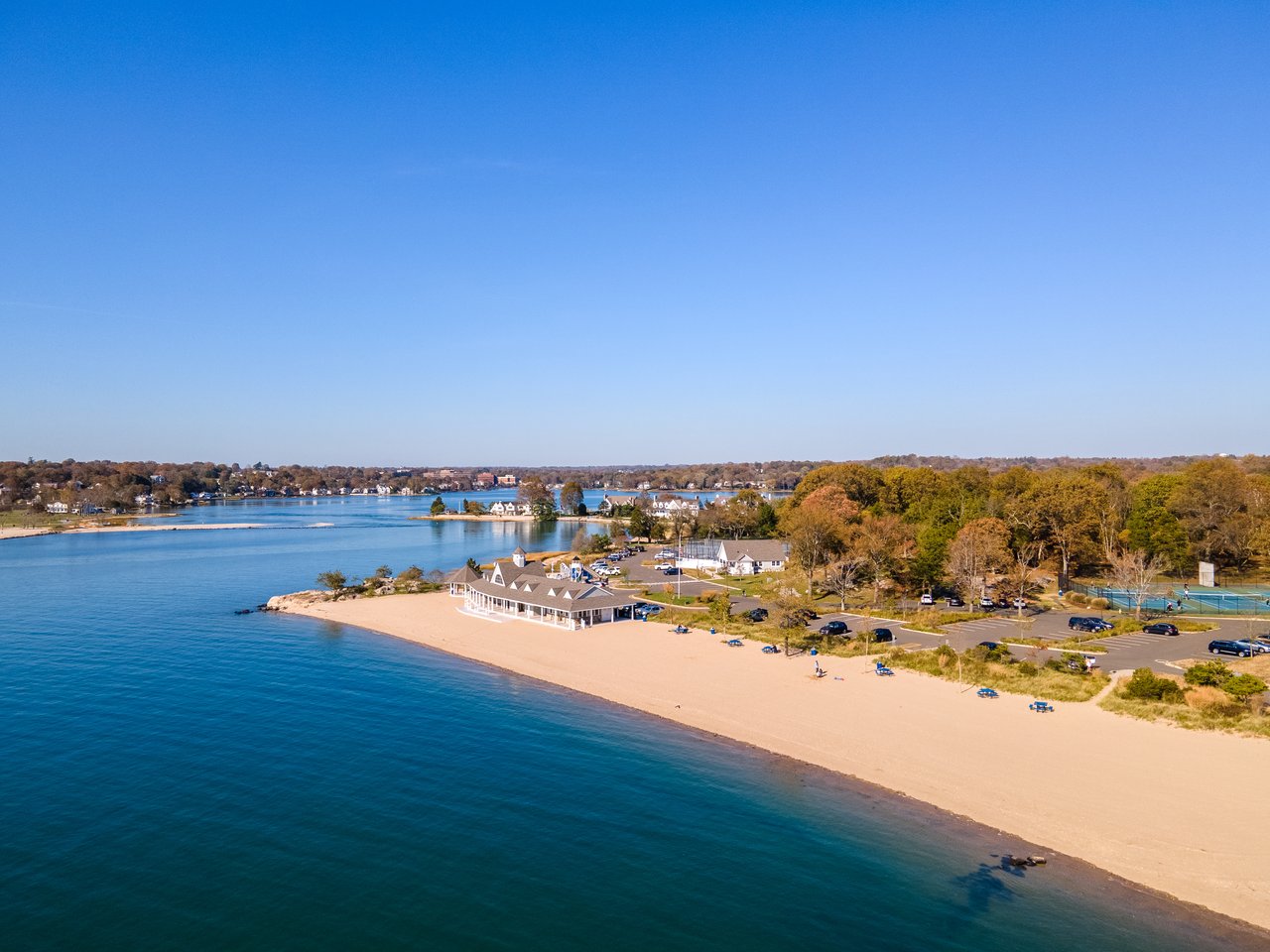
Pear Tree Point Beach sits at the mouth of the Goodwives River and offers a bathing area, picnic area, gazebo, bathhouse, boat launch ramp, and kayak racks for resident rental through a lottery system. These amenities can add meaningful value to a near-water lifestyle, especially if you do not need direct waterfront ownership.
Access is controlled by permit. For the 2026 season, permits were available to Darien residents and Darien real estate taxpayers, and permits were required for entry during seasonal gatehouse periods.
Moorings, slips, and waitlists
If you plan to keep a boat in Darien, ask detailed questions early. The town’s mooring system requires annual renewal by May 1, has no annual mooring fees, charges $15 per year for the online system, and maintains waiting lists for all harbors.
The Harbor Master also notes that the only club in town that rents slips has a very long wait list. In practical terms, this means a property’s boating appeal may depend on whether access is already in place or whether you would be entering a queue.
For buyers, this can make a major difference in value and convenience. A home with confirmed, usable access may feel very different from one where access depends on a future opening.
Pricing and competition in Darien
Darien remains one of the more expensive markets in Fairfield County. Mid-2026 market data showed an average home value of $2,477,368, while Redfin reported a May 2026 median sale price of $2,775,839, up 11% year over year.
Other market reporting described Darien as a seller’s market, with homes moving quickly. Zillow said homes were pending in around 10 days, while Realtor.com reported a median of 30 days on market and a median listing price near $3 million in ZIP code 06820.
Limited land supply also shapes the market. The town notes that much of new single-family development comes from tear-downs and replacement homes because vacant land is limited.
For shoreline buyers, scarcity is often even more pronounced. Properties with direct views, a stronger access position, or beach-related convenience are likely to compete on more than square footage alone.
Flood zones and coastal review
Near-water buying in Darien also means understanding flood geography. The town’s flood maps specifically identify the south Darien, Goodwives River, Holly Pond, Noroton Bay, Scotts Cove, Tokeneke, and Five Mile River areas as places where flood conditions deserve close attention.
Darien’s flood regulations identify FEMA special flood hazard areas A, AE, and VE. The VE designation is a coastal high-hazard area, which can have major implications for construction and renovation.
The town also requires coastal site plan review for buildings, uses, and structures within the coastal boundary unless a limited exemption applies. If you are considering renovations, additions, or substantial improvements, this review process may become part of your timeline.
For new or substantially improved residential structures in regulated flood areas, Darien requires the lowest floor to be elevated at least one foot above base flood level. That is a critical detail if you are thinking about a long-term renovation strategy.
Docks, seawalls, and permit checks
A dock or seawall can be a major asset, but it should never be taken at face value. Connecticut DEEP regulates docks, pilings, floats, marine railways, dredging, seawalls, bulkheads, tide gates, and many forms of maintenance or repair when work is in tidal wetlands or waterward of the coastal jurisdiction line.
DEEP also says living shoreline projects in these areas require authorization and recommends pre-application coordination. Darien’s own guidance says buyers considering property with coastal structures should first check with DEEP to confirm whether those structures are permitted.
That matters even if the structure already exists. Some maintenance and repair work may still require authorization, so you will want permit verification before closing, not after.
Questions to ask before you buy
When you compare Darien’s near-water properties, ask clear questions early. Doing so can help you avoid confusion and focus on homes that truly fit your goals.
Start with this checklist:
- Is the home truly waterfront, or is access tied to beach rights, a mooring, a club, or an association?
- Is any dock, mooring, or slip permitted, transferable, and available without a waitlist?
- Is the property within a coastal boundary or flood zone, including a VE zone?
- Would planned renovations trigger elevation rules or coastal site plan review?
- Are streets, drainage, or common areas privately maintained?
- What ongoing costs should you expect for permits, launch access, flood insurance, or shoreline maintenance?
- Are there existing coastal structures that need permit verification or repair planning?
These questions help you evaluate the full ownership picture, not just the setting. In Darien, that is often where the smartest buying decisions are made.
Buying strategically near the water
The best near-water purchase in Darien is not always the one closest to the shoreline. It is the one that matches how you want to live, what level of maintenance you can take on, and how you want to use the water.
For some buyers, that means prioritizing direct frontage. For others, it means choosing a home with easier beach access, fewer structural obligations, or a neighborhood setting that feels more manageable year-round.
A thoughtful search should weigh access, permitting, flood exposure, and ownership structure alongside beauty and resale potential. In a market this nuanced, details matter.
If you are considering buying near the water in Darien, working with a local advisor who understands Fairfield County shoreline micro-markets can help you move with more clarity and confidence. When you are ready to explore Darien’s waterfront and beach-adjacent opportunities, connect with Gina Hackett.
FAQs
What does near the water mean in Darien, CT?
- In Darien, near the water can mean true waterfront, cove or harbor frontage, beach-adjacent location, or a home in a private-association neighborhood with a different type of water access.
Are Darien beaches open to everyone?
- Darien’s beach access is permit-based, and for the 2026 season permits were available to Darien residents and Darien real estate taxpayers, with permits required during seasonal gatehouse periods.
Can you get a mooring easily in Darien, CT?
- Darien maintains waiting lists for all harbors, and the town’s mooring system requires annual renewal by May 1 plus a $15 yearly online system charge.
Do waterfront homes in Darien need special permit review?
- Homes and structures within Darien’s coastal boundary generally require coastal site plan review unless a limited exemption applies, and shoreline structures may also require state permit review.
What flood zones matter when buying near the water in Darien?
- Darien identifies FEMA special flood hazard areas A, AE, and VE, with VE designated as a coastal high-hazard area that can affect building and renovation requirements.
Why should buyers verify docks and seawalls in Darien, CT?
- Existing docks, seawalls, and other coastal structures may be regulated by Connecticut DEEP, and buyers should confirm permit status because even maintenance or repair work may require authorization.